Toggle light / dark theme

Magnetizing the Future of Quantum Communication: Single-Photon Emission from Defective Tungsten Diselenide

Quantum communication is one of the most exciting frontiers in secure data transmission. Now, a groundbreaking discovery by researchers at Kyoto University offers a major leap forward: a single-photon source created using defective tungsten diselenide (WSe2), enhanced under the influence of a magnetic field. The result? A powerful and controllable emitter that could revolutionize quantum information technologies.

The original article can be accessed at: Phys.org.

Transportation @ PNNL: Eliminating Critical Materials in Batteries

Pacific Northwest National Laboratory draws on its distinguishing strengths in chemistry, Earth sciences, biology and data science to advance scientific knowledge and address challenges in energy resiliency and national security. Founded in 1965, PNNL is operated by Battelle and supported by the Office of Science of the U.S. Department of Energy. The Office of Science is the single largest supporter of basic research in the physical sciences in the United States and is working to address some of the most pressing challenges of our time. For more information, visit the DOE Office of Science website. For more information about PNNL, visit PNNL’s News Center. Follow us on X, Facebook, LinkedIn and Instagram.

New ChatGPT AI agent proves that it is «not a robot» — CloudFlare trusted it without CAPTCHA

It turns out that one of the most common ways to check security on the Internet is just child’s play for ChatGPT Agent. The irony is that the test requires you to prove that you «not a bot», which the OpenAI bot managed to do…

Magnetizing quantum communication: Single-photon source created using defective tungsten diselenide

As the demand for more secure data transmission increases, conventional communication technologies are facing limitations imposed by classical physics, and are therefore approaching their limits in terms of security. Fortunately, quantum communication may help us overcome these restrictions.

Flaw in Gemini CLI AI coding assistant allowed stealthy code execution

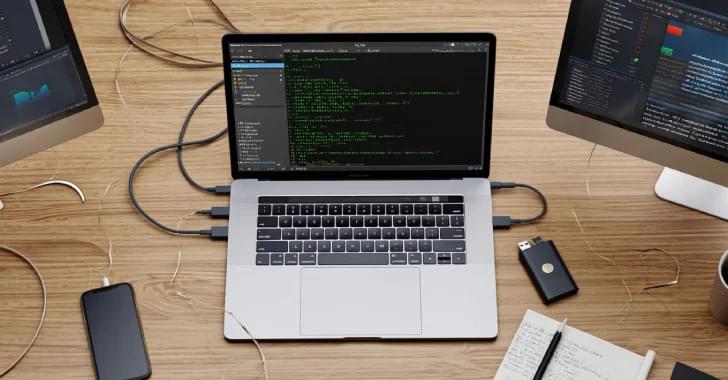
A vulnerability in Google’s Gemini CLI allowed attackers to silently execute malicious commands and exfiltrate data from developers’ computers using allowlisted programs.

The flaw was discovered and reported to Google by the security firm Tracebit on June 27, with the tech giant releasing a fix in version 0.1.14, which became available on July 25.

Gemini CLI, first released on June 25, 2025, is a command-line interface tool developed by Google that enables developers to interact directly with Google’s Gemini AI from the terminal.

Microsoft: macOS Sploitlight flaw leaks Apple Intelligence data

Attackers could use a recently patched macOS vulnerability to bypass Transparency, Consent, and Control (TCC) security checks and steal sensitive user information, including Apple Intelligence cached data.

TCC is a security technology and a privacy framework that blocks apps from accessing private user data by providing macOS control over how their data is accessed and used by applications across Apple devices.

Apple has fixed the security flaw tracked as CVE-2025–31199 (reported by Microsoft’s Jonathan Bar Or, Alexia Wilson, and Christine Fossaceca) in patches released in March for macOS Sequoia 15.4 with “improved data redaction.”